Your skills. Your language.
A centralized skills library that your organization defines, organizes, and owns — the foundation every assessment, framework, and career pathway is built on.
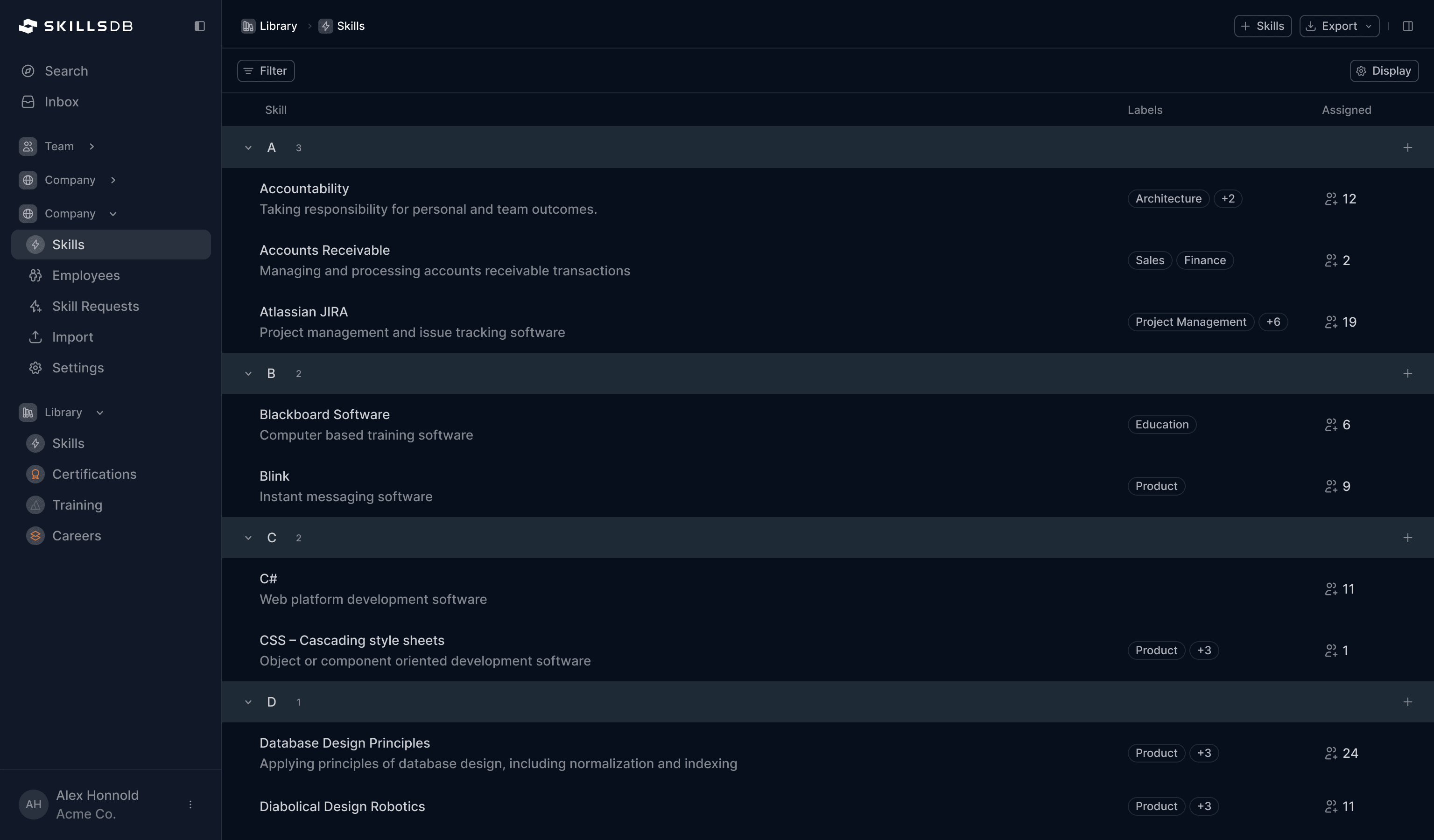
Every skills initiative starts the same way: someone needs a list of skills. So they buy a platform with a pre-built taxonomy — thousands of generic skills they didn’t write, don’t recognize, and can’t change. The taxonomy doesn’t match how the organization actually talks about what people do. Adoption stalls before it starts.
The alternative is a spreadsheet. Which works until it doesn’t — no versioning, no connection to assessments, no way to track who has what.
Your taxonomy. Your single source of truth.
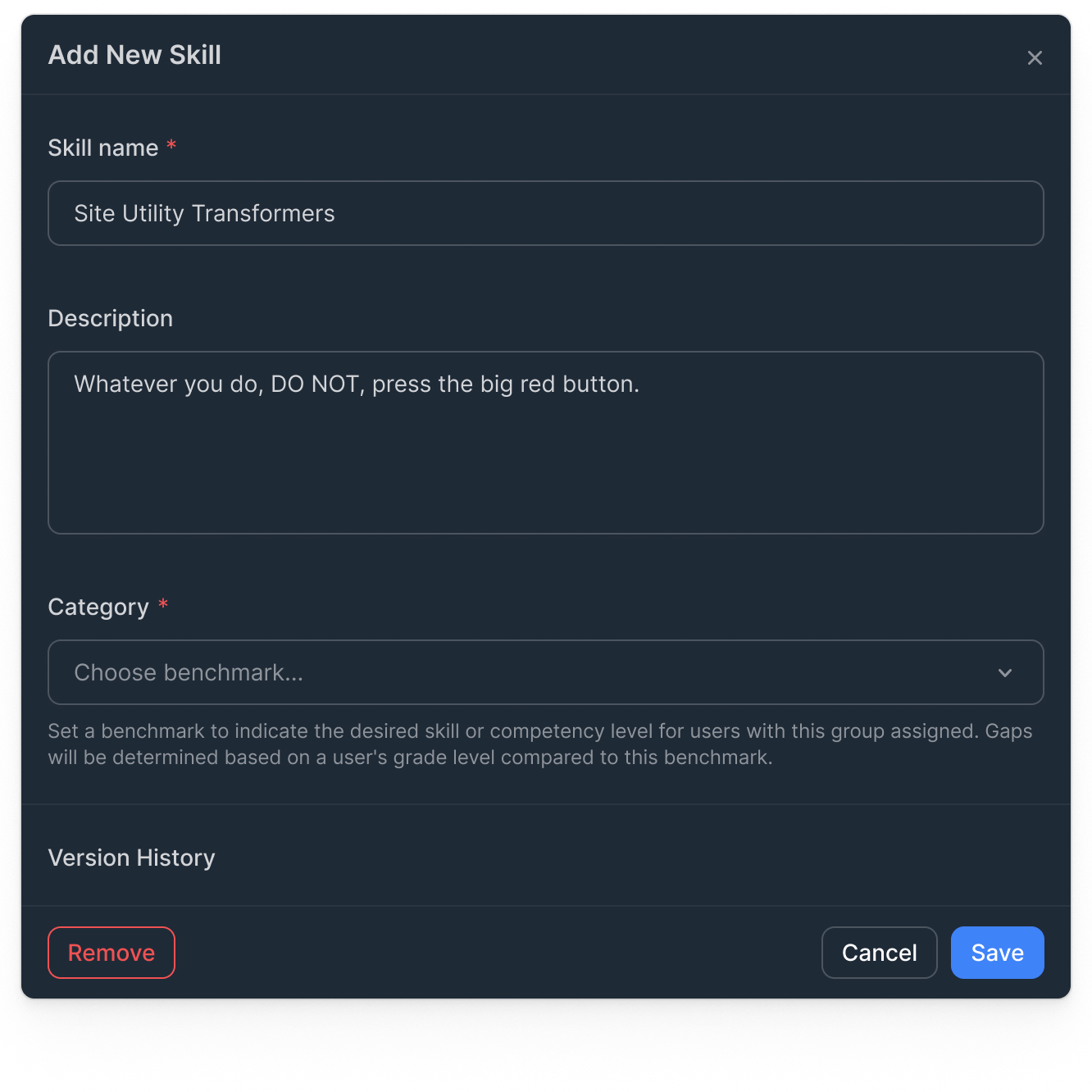
The SkillsDB skills library is yours from the start. You define every skill, description, label, and category in your own language. No locked vendor lists. No generic taxonomies you have to adopt wholesale. The library is the single source of truth that career frameworks, assessments, gap analysis, and learning plans all draw from — so when you update a skill once, every system that references it stays in sync.
Trusted by some of the world's best companies


Built in your language, not a vendor’s
Every skill name, description, and category is defined by your organization. No generic taxonomies to adopt, no locked lists to work around. If your team calls it “Client Relationship Management” instead of “Account Management,” that’s what it’s called.
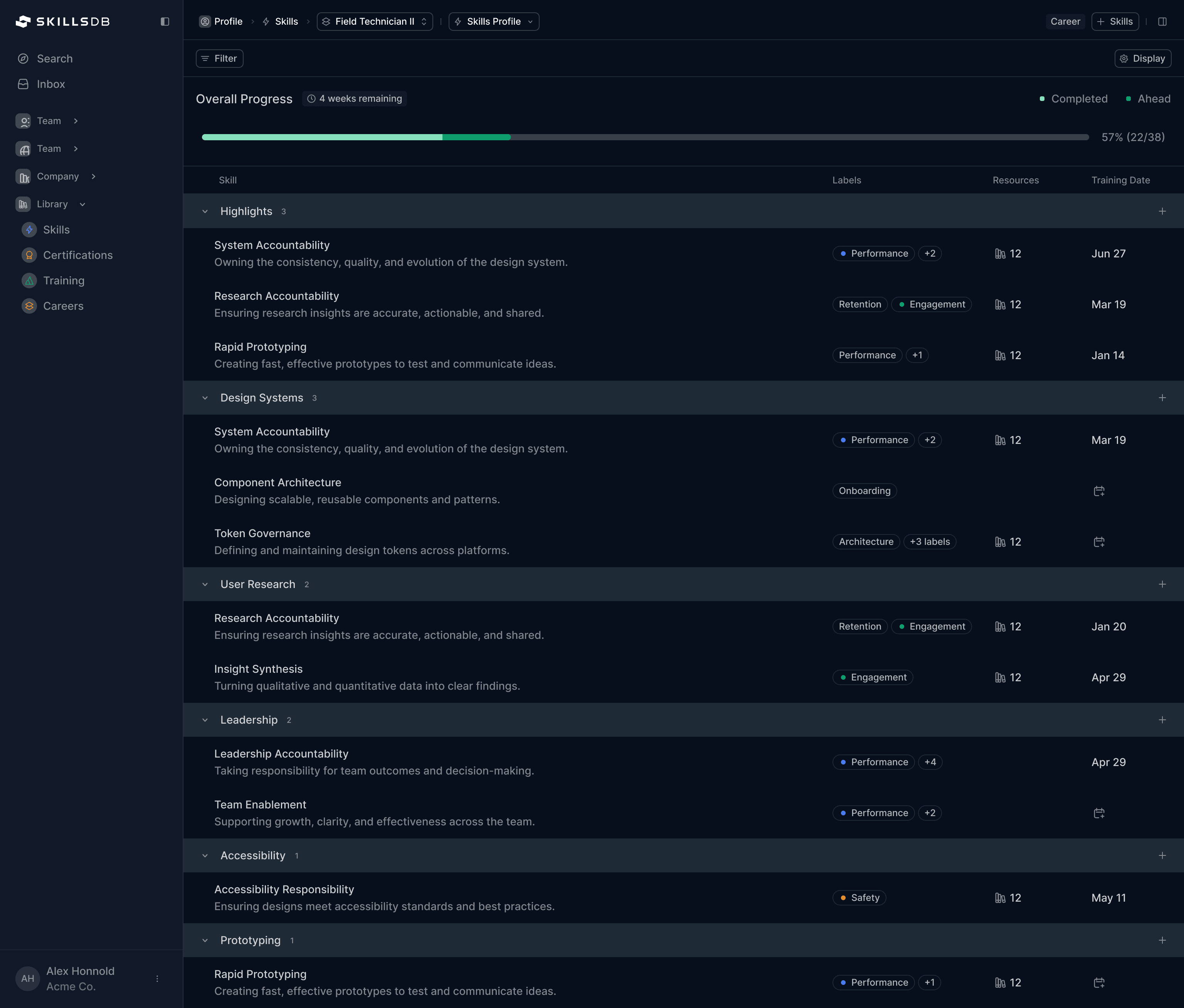
One library feeds everything
Skills defined here flow into career frameworks, proficiency assessments, gap analysis, learning plans, and the skills matrix. One source of truth. Update a skill description once and it’s reflected everywhere.
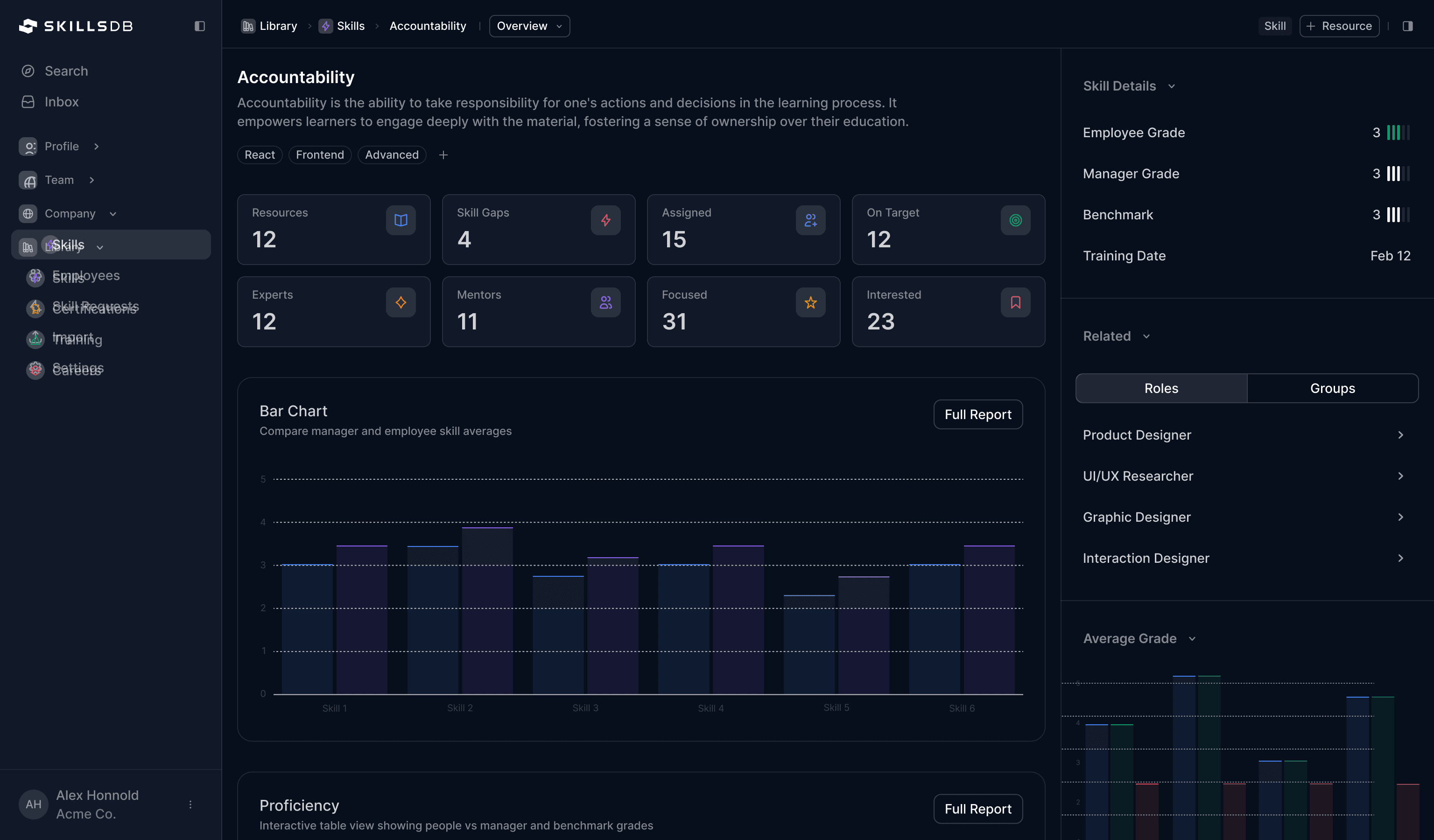
Organized however your org thinks
Use multi-level categories to build a taxonomy hierarchy. Add labels for cross-cutting tags like department, function, or certification area. Group by alphabetical sections for fast navigation at scale. The organizational model adapts to you.
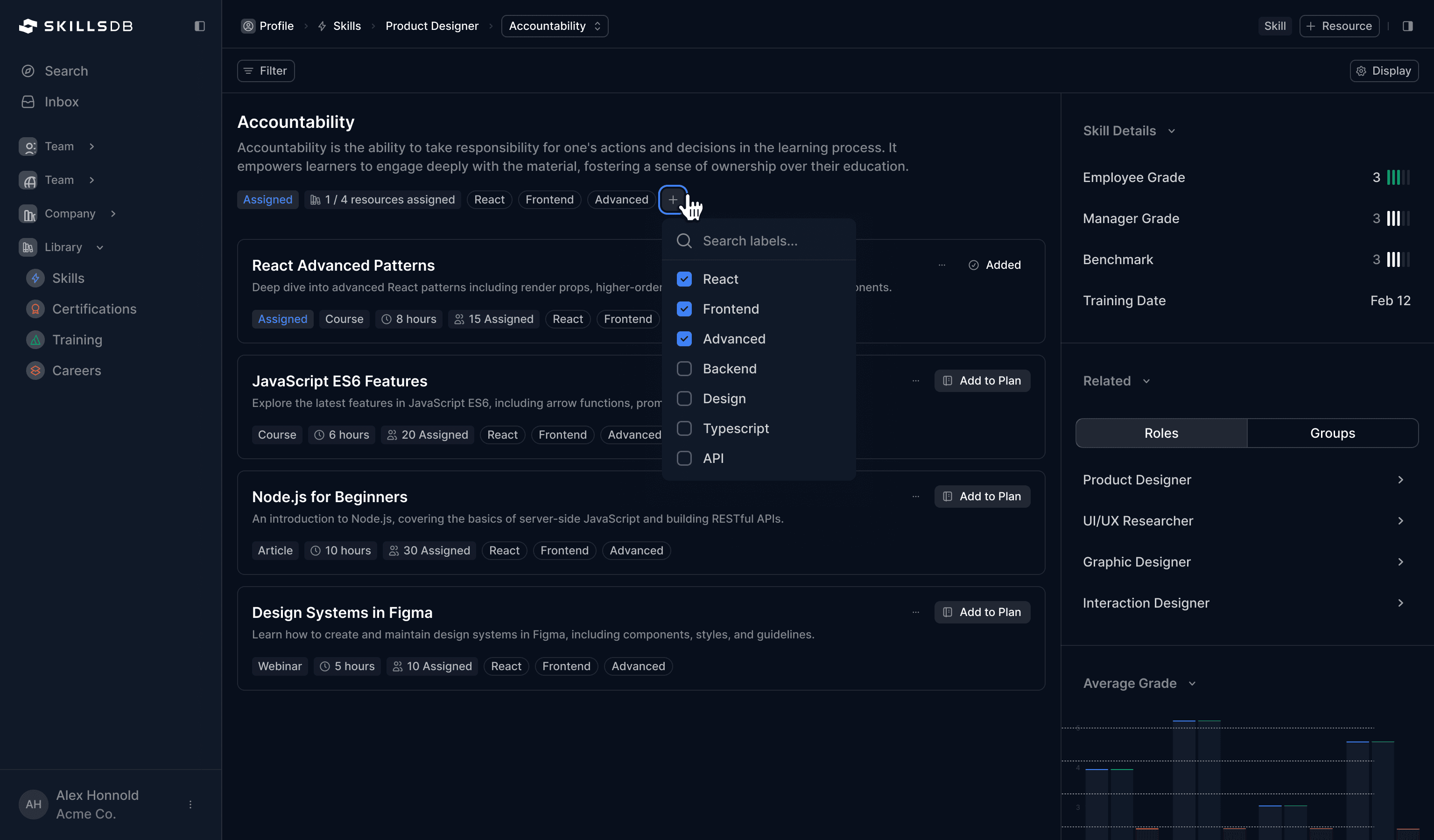
Employee skill requests built in
Employees can request skills that don’t exist in the library yet. Requests go to admins for approval — so the library grows with your organization’s real needs, not just top-down assumptions.
Assign individually or in bulk
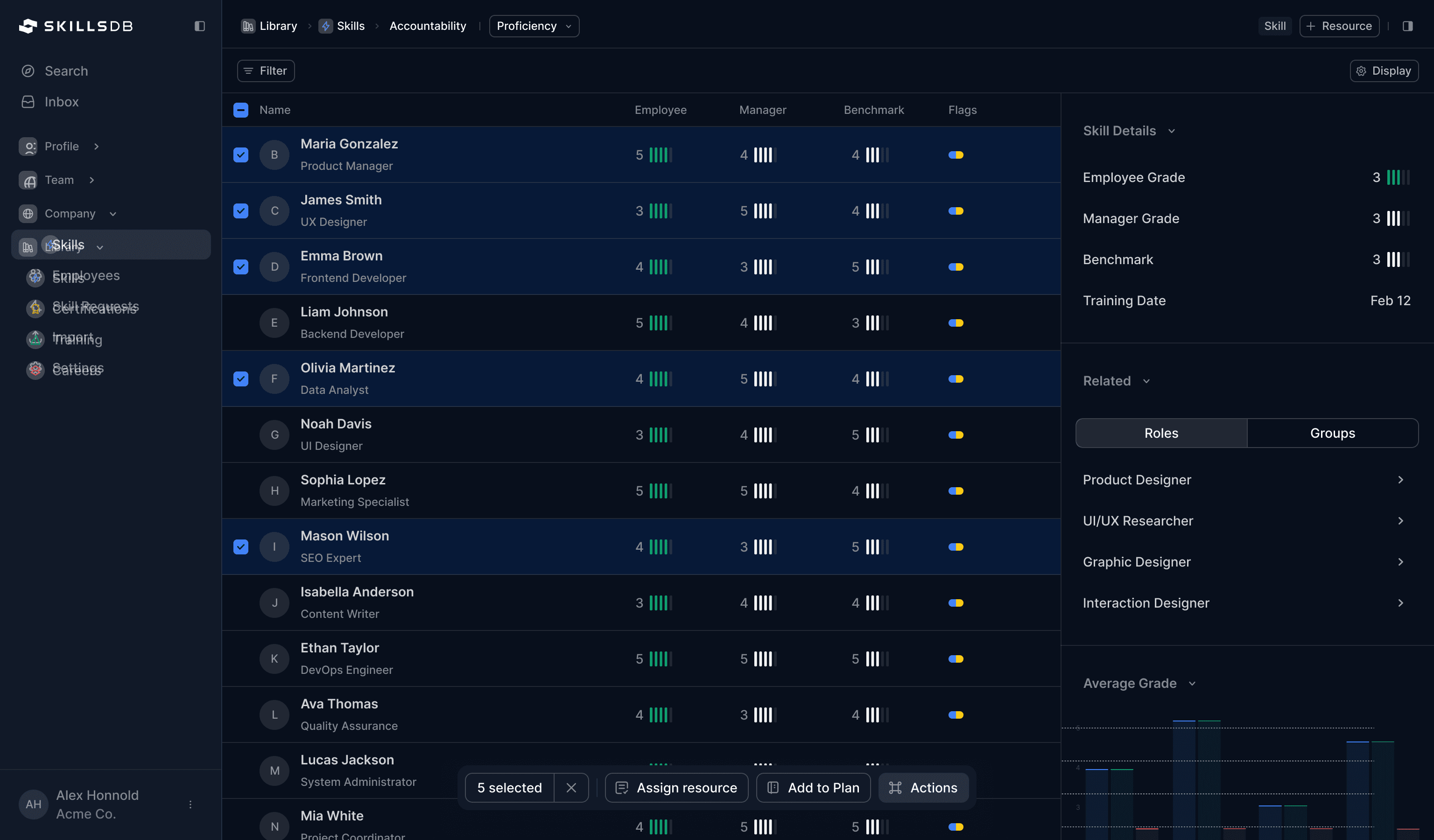
Assign skills to people one at a time or use bulk operations for team-wide rollouts. Managers can assign direct reports. Admins can assign across the organization. Employees can add skills to their own profile from the library.
How It Works
For Talent Development
Build your skills library from scratch or by importing. Organize into categories with labels. Use skills to build career frameworks with benchmarks — the foundation for everything.
ExploreFor Resource Planning
A well-structured library makes capability searchable. Filter by category, label, or assignment status to see which skills are covered and where the org is thin.
ExploreFor Workforce Strategy
Use assigned and trained counts across the library to see skill depth and concentration at the org level. Identify where capability is strong and where it’s fragile.
ExploreFor Frontline Training
Define skills in language operators and trainers recognize. Assign to people, link training resources, and track who’s been trained versus who still has gaps.
ExploreThe foundation matters. Every assessment, framework, and gap report in SkillsDB draws from one skills library. When the taxonomy is wrong, everything downstream is wrong. That’s why the library is yours to define — not ours.
SkillsDB has helped organizations build and maintain skills taxonomies since 2008. Fortune 500 customers. SOC2 Type II certified. GDPR compliant. 30+ countries served.
Related Features
Competency Frameworks
Organize skills into structured career frameworks with levels and sections.
ExploreProficiency Assessment
Assess employees against the skills defined in your library.
ExploreGap Analysis
Identify where proficiency falls below benchmarks for library skills.
ExploreSkills Matrix
See who has what across your team in one interactive grid.
ExploreLearning Plans
Link training resources to skills for targeted development.
ExploreCertifications
Track credentials alongside the skills they validate.
ExploreThe right taxonomy is a core company asset.
Build a skills library in your language, connect it to frameworks and assessments, and give every talent decision a foundation you can trust.
Book Demo